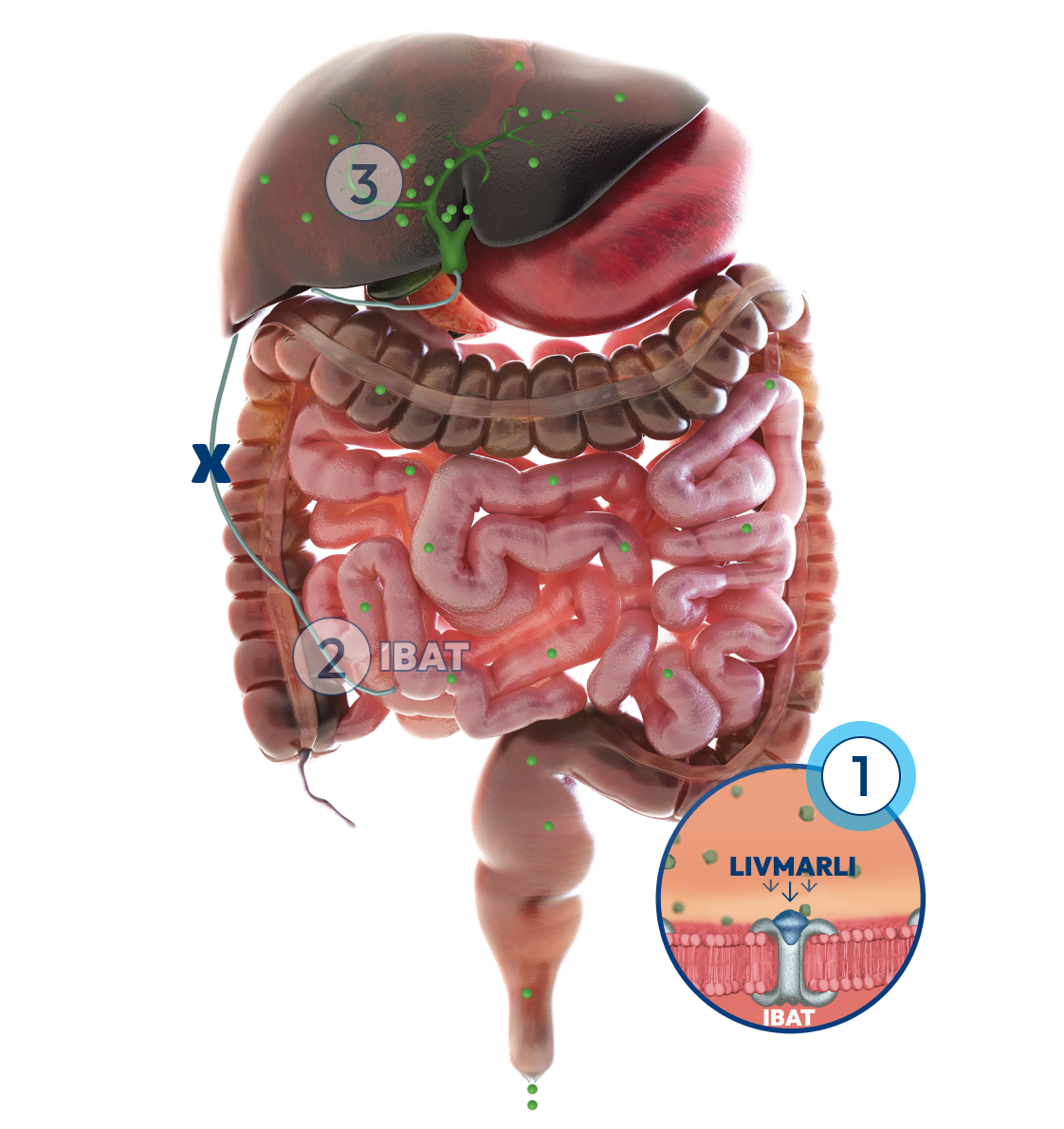
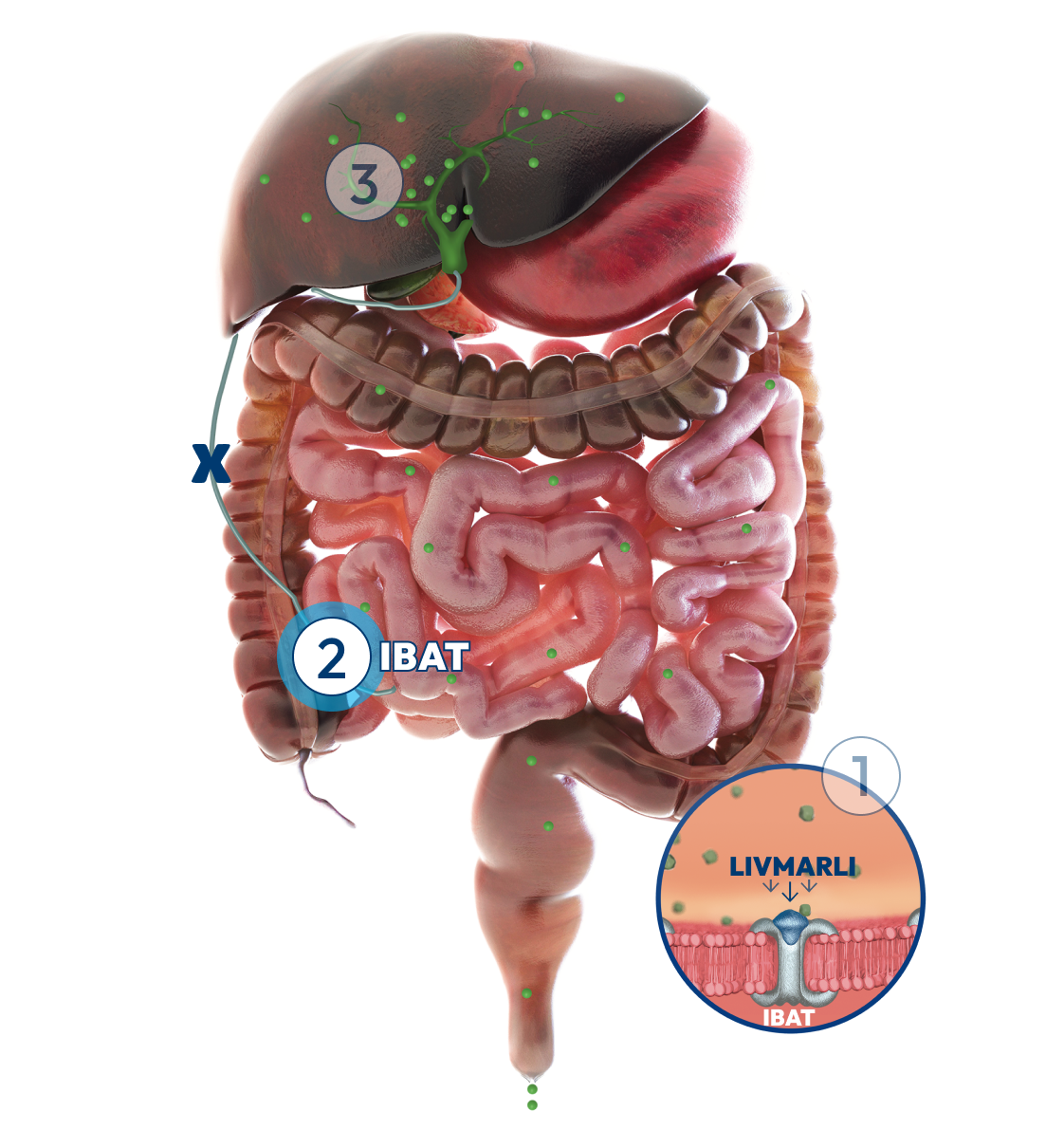
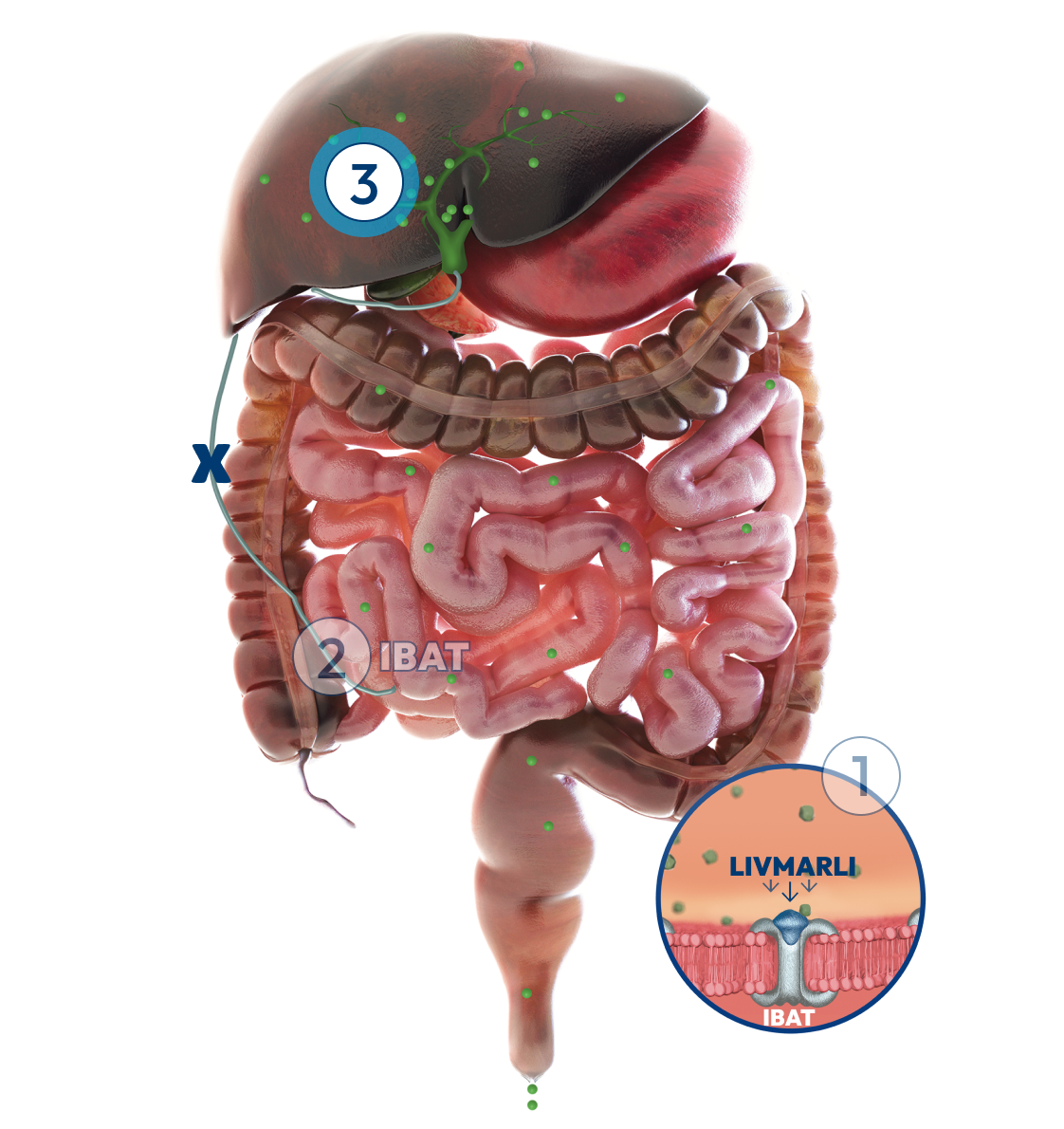
LIVMARLI is an FDA-approved medicine specifically designed to treat cholestatic pruritus (itch) in patients 12 months of age and older with progressive familial intrahepatic cholestasis (PFIC). LIVMARLI helps relieve cholestatic pruritus and lower bile acid buildup.
LIVMARLI is not for use in PFIC type 2 patients who have a severe defect in the bile salt export pump (BSEP) protein.

Side effects can happen as your body is adjusting to LIVMARLI and working to get rid of excess bile. Talk with your doctor about what to expect and how to manage any side effects.
- Diarrhea (around 6 in 10 people)
- Stomach pain (around 3 in 10 people)
- Fat-soluble vitamin (FSV) deficiency (around 3 in 10 people)
- Liver test abnormalities (around 2 in 10 people)
- Rectal bleeding (around 1 in 10 people)
- Bone fractures (around 1 in 10 people)
-
 About gastrointestinal (GI) side effects GI events like diarrhea and stomach pain may occur as your body adjusts to LIVMARLI. In clinical studies, most GI side effects were mild to moderate and temporary, lasting 5.5 days, on average.
 -
 About fat-soluble vitamin (FSV) deficiency
Though LIVMARLI may affect absorption of FSVs, patients with PFIC can have FSV deficiency at the start of treatment and are often supplemented with FSVs.
In clinical studies, FSV deficiency was more common with placebo than with LIVMARLI (35% vs 28%, respectively), after 26 weeks of treatment.
Because PFIC can affect vitamin absorption, bone weakness and fractures may occur.
-
 About liver test abnormalities High levels of certain liver enzymes called alanine aminotransferase (ALT) and aspartate aminotransferase (AST) can be a sign of liver injury. Your doctor should monitor liver tests during treatment with LIVMARLI.
*“Common” defined as occurring in ≥5% of patients treated with LIVMARLI.
-

Many side effects can improve with proper management
-

Your doctor is your treatment partner. If side effects occur, always talk with your doctor before stopping treatment
-

They may adjust your dose, pause treatment briefly, or suggest supportive steps (like diet changes, fluids, or over-the-counter medicines) to ease GI side effects